If you own a Bullfrog Spa, you already know what it feels like to sink into perfectly warm water after a long day. But keeping that water clean, clear, and safe? That's where some owners get overwhelmed.
Spa water care isn't as complicated as it looks. Once you understand a few key concepts — what we call the APCs — you'll feel confident every time you lift the cover.
Think of it like learning your ABCs, but for your hot tub.

A is for Alkalinity (Total Alkalinity)
What it is: Total alkalinity measures the water's ability to resist changes in pH. Think of it as pH's shock absorber. When alkalinity is in range, your pH stays stable. When it's off, everything else goes haywire.
Ideal range: 80–120 ppm (parts per million)
Why it matters: Low alkalinity causes your pH to swing wildly, which leads to corrosion, cloudy water, and skin irritation. High alkalinity makes the pH nearly impossible to adjust and can cause scaling on your spa's surfaces and equipment.
Quick fix:
- Too low? Add an alkalinity increaser in small increments. Always adjust alkalinity before pH.
- Too high? Use a pH decreaser, allowing the water to circulate between adjustments.
P is for pH
What it is: pH measures how acidic or basic your water is on a scale of 0–14. The sweet spot for spa water is slightly basic.
Ideal range: 7.2–7.6
Why it matters: Water that's too acidic (low pH) can sting eyes, irritate skin, corrode metal fittings, and degrade your spa's shell. Water that's too basic (high pH) causes cloudy water, scaling, and reduces the effectiveness of your sanitizer.
Quick fix:
- Too low? Add a pH increaser in small increments.
- Too high? Add a pH decreaser. Always adjust alkalinity first, then fine-tune pH.
C is for Calcium Hardness
What it is: Calcium hardness refers to the amount of dissolved calcium in your water. This typically needs to be adjusted only once each time you fill your spa.
Ideal range: 150–250 ppm
Why it matters: Water that's too soft (low calcium) is "hungry" — it will leach calcium from your spa's plumbing, shell, and fittings to satisfy itself, causing pitting and etching over time. Soft water can also make your sanitizer less effective and your water foamy. Water that's too hard causes white, chalky scale buildup on jets, surfaces, and equipment.
Quick fix:
- Too low? Add a calcium hardness increaser.
- Too high? The most effective fix is a partial drain and refill. If too much calcium hardness increaser was added, diluting with fresh water brings calcium levels down naturally.
-
Be sure not to fill your spa using soft water if your home is equipped with a water softener.

Other Key Water Care Terms You Should Know
Now that you've got your APCs down, here are the other key players that keep your water safe and clear: filtration, sanitization, and oxidation. For these three systems to work, it’s crucial that your APCs are balanced first.
Filtration
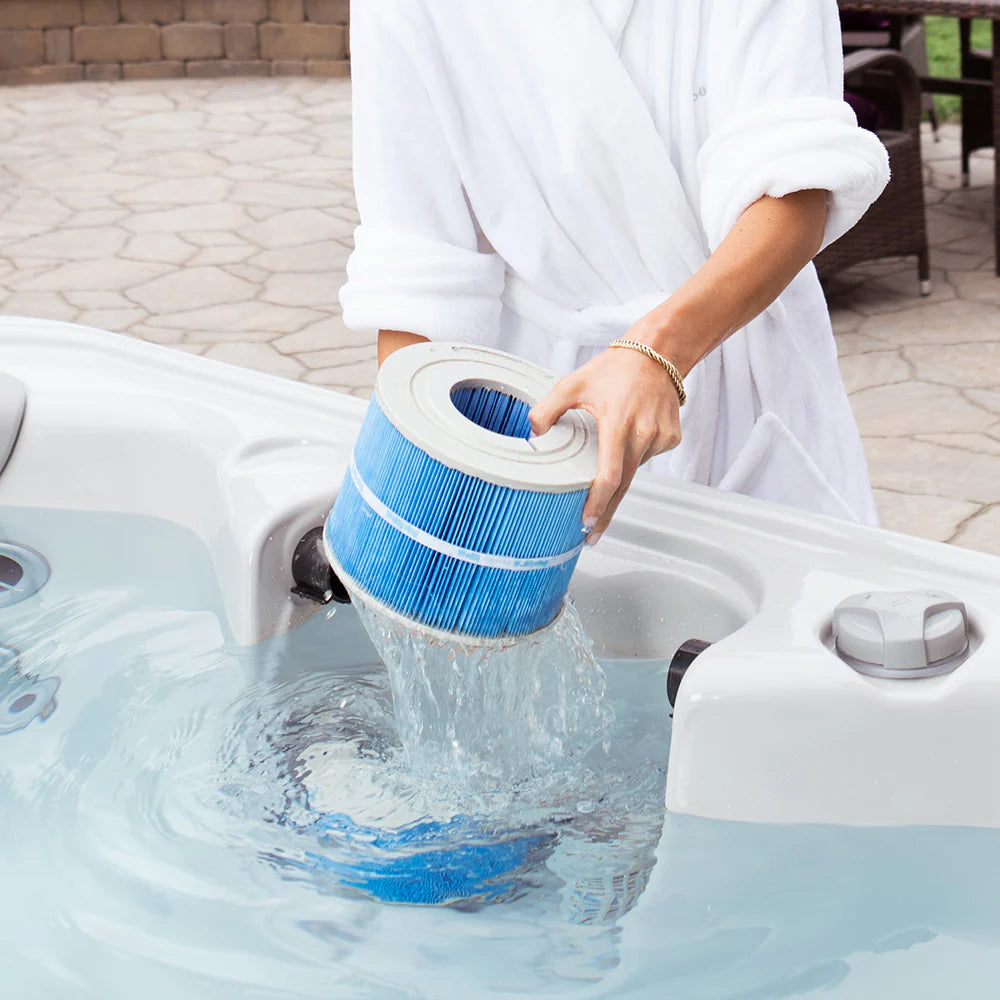
What it is: Filtration is the mechanical process of circulating water through filter media to remove debris, oils, and organic particles.
Your Bullfrog Spa's Simplicity® Filtration System works continuously, pulling water through filters to keep it clear before contaminants even have a chance to build up. The WellSpring™ Dedicated Filtration Pump takes it a step further — it’s over 8x more effective at moving water through filters compared to standard circulation pumps and uses up to 60% less operating energy.
Your job: Rinse filters regularly and replace them on schedule. Ensure your filter cycles are programmed for at least 8 hours each day. If you have a dedicated filtration pump, program your filter cycles to run 16 hours each day to maximize the benefits. Get filters auto-shipped to your door exactly when you need them by subscribing to the Cleartub Club.
Sanitization
What it is: Sanitizers kill bacteria, viruses, and other pathogens in your water. This is non-negotiable — without proper sanitization, your spa water becomes a breeding ground for harmful microorganisms.
The two most common sanitizers are chlorine and bromine. Chlorine is fast-acting, but degrades faster in heat, and has a chemical odor. Bromine acts more slowly but is more stable in high temperatures, has a milder odor, and is good for ongoing spa sanitation.
But there’s a third option that is mineral-based — FROG® @ease — and it’s the recommended system for Bullfrog Spas. The FROG @ease system combines a mineral cartridge with a SmartChlor® cartridge, which contains chlorine levels that are 5–10x lower than competing systems.
Your job: If you’re using Frog @ease Bullfrog Spas, replace your silver SmartChlor cartridge about once a month, and replace the blue mineral cartridge once every four months. Get FROG cartridges auto-shipped to your door exactly when you need them by subscribing to the Cleartub Club.
Oxidation
What it is: Oxidation breaks down organic contaminants (like body oils, lotions, and cosmetics) that sanitizers alone can't always eliminate. Sanitizers kill contaminants, then oxidizers remove them.
Chemical oxidizer is often called “shock.” In addition to adding shock to your water, you can optimize the oxidation in your spa by opting for one of the automated systems Bullfrog Spas offers.
Your job: For typical use, it’s adequate to shock your spa water once per month. For heavy use, shock your spa water weekly. We love using FROG @ease Maintain Packets because they are conveniently pre-measured. Pro tip: Leave your spa cover open for a few minutes after adding oxidizer, as it turns dead contaminates into gas. This helps to extend the life of your spa cover, pillows, and interior decals. Get spa shock auto-shipped to your door exactly when you need it by subscribing to the Cleartub Club.

Make It Even Easier: The Cleartub Club
Cleartub is the online superstore built specifically for Bullfrog Spa owners. As an authorized Bullfrog Spas® dealer, we know exactly what your spa needs and have a team of experts ready to help. Cleartub Club members receive a perfectly curated, 4-month supply of premium chemicals to their door automatically.
Take our compatibility quiz to find the right system for your spa.
Frequently Asked Questions
What is the most important thing to balance in a hot tub?
Start with alkalinity (80–120 ppm), then adjust pH (7.2–7.6), then check calcium hardness (150–250 ppm).
How often should I test my spa water?
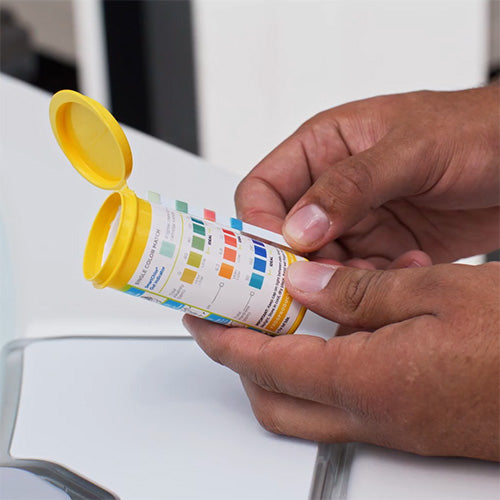
Test once per week or after heavy use.
Is FROG @ease better than chlorine for a Bullfrog Spa?
Yes! The Frog @ease system is designed specifically for Bullfrog Spas and has up to 10x times less chlorine than a traditional system. Plus, its cartridge design makes for simple operation.
Do I need both a sanitizer and an oxidizer?
Yes, they work together. Sanitizers kill living pathogens; oxidizers break down non-living organic waste.